Brine Shrimp in the Classroom: An Primary Educator’s Guide
Objective
To introduce primary school students to Artemia, fascinating little crustaceans better known to generations of kids as “Sea-Monkeys” or brine shrimp. This series of co-exists with the Brine Shrimp Eggs Australian Guide for a simple, hands-on classroom experiments is designed to foster early habits of observation, hypothesis testing, and scientific discovery.
1. Overview & Grade Suitability
In this brine shrimp guide you will discover that culturing brine shrimp and hatching brine shrimp into small, incredibly hardy crustaceans that are safe, inexpensive, and highly engaging in a classroom environment. In Australia, you can easily source brine shrimp cysts (eggs) from local aquarium shops, where they are typically sold as live food for tropical fish fry (baby fish).
Bringing “dirt” to life right on a classroom window sill is an excellent way to develop inductive reasoning and observational skills in young minds.
Year Level & Scheduling
- Foundation to Year 2: Focus on loose, exploratory activities. Younger children learn immensely as they hatch brine shrimp and observing how the shrimp move.
- Years 3 to 4: Students can take on structured experiments, tracking variables like light, temperature, and salinity.
- Time Commitment: Expect to dedicate about 30 minutes per class, two to three times a week, though students will likely want to steal a quick glance every single day.
A Note on Brine Shrimp in the Classroom Safety: If a student accidentally swallows a few brine shrimp eggs, there is no need to panic. The cysts cannot hatch in the human stomach; our natural stomach acids and digestive enzymes will simply digest them like ordinary food. If a cyst gets into a student’s eye, flush immediately with running water. Always have students wash their hands thoroughly after handling the culture water—especially before recess or lunch!
2. Brine Shrimp in the Classroom
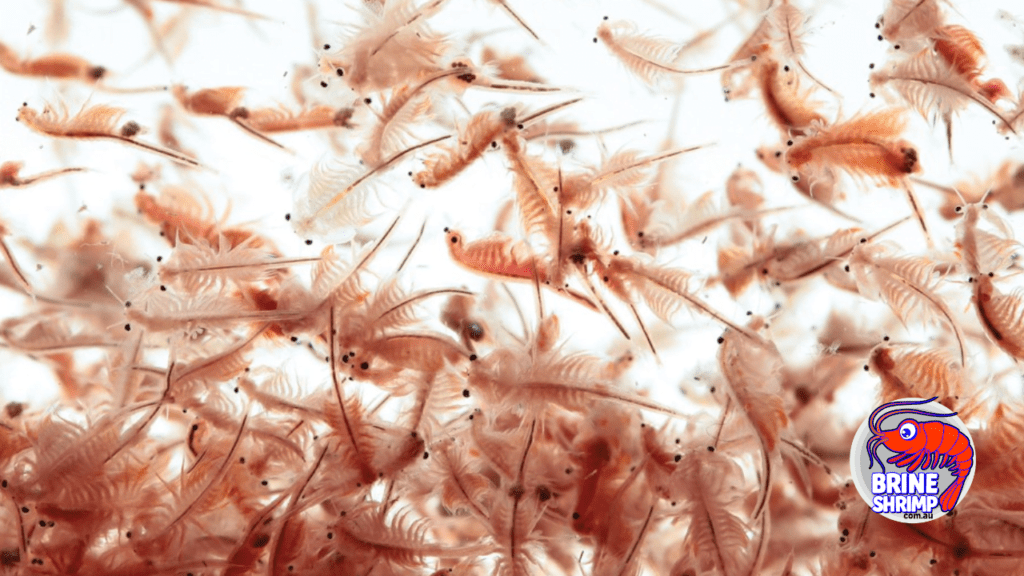
While famous worldwide, most widely known as sea monkeys Australia – Artemia are highly adaptable. Locally, various species thrive in extreme Australian environments, from the commercial salt pans of Western Australia and South Australia to inland salt lakes like Lake Eyre during flooding cycles. They are also an important seasonal food source for native Australian waterbirds, such as the Banded Stilt and the Australian Pelican.
Classroom Discussion Starters
- Are they real shrimp? Bring a whole, un-peeled banana prawn or king prawn to class. Have the children compare a standard edible prawn with their microscopic brine shrimp. How are they similar? How are they different?
- How did they get there? Discuss how brine shrimp end up in isolated, landlocked salt lakes in the middle of the outback. Could migratory waterbirds transport the sticky eggs on their feet or in their mud-coated feathers? Can the dry eggs travel on the wind?
- Why don’t they live in the ocean? Brine shrimp have no natural defense mechanisms against predators. Their only survival strategy is living in water so salty that fish cannot survive. To cope, they have evolved the most efficient osmoregulatory (salt-filtering) system in the animal kingdom.
3. Materials List for Classroom Experiments
To set up your classroom hatchery station, gather the following essentials:
- 1 vial of high-grade brine shrimp cysts
- 750 grams of pure pool salt or rock salt (makes up to 20 litres of saltwater)
- 15 transparent plastic containers or clean, inverted 2-litre soft drink bottles
- 30 hand lenses or magnifying glasses
- 30 plastic teaspoons & 30 medicine droppers (pipettes)
- Metric measuring cups and cylinders
- Equipment for advanced tracks: Yeast or Spirulina powder, an aquarium air pump, rigid airline tubing, a small aquarium heater, and an adjustable desk lamp.
4. Setting Up the Hatchery
Hatching is an incredibly rewarding event that usually unfolds within 24 hours.
[Standard Recipe for 1 Litre of Hatching Water]
1 Litre Tap Water + 25-30g Pure Salt (approx. 1.5 Tablespoons)
+ 1 Pinch of Brine Shrimp Cysts
Classroom Observations
At 24–28°C, the eggs will undergo the “umbrella” stage around the 16–18 hour mark, where the embryo hangs beneath the broken shell. Soon after, they emerge as tiny, orange, free-swimming dots (Instar I nauplii).
Have your students hold their containers up to a light source and use their hand lenses. You are bound to hear descriptions like: “They look like they’re doing the breaststroke!” or “They move in little jerks!”

5. What Do Brine Shrimp in the classroom Eat?
Brine shrimp are non-selective filter feeders, meaning they continuously consume anything small enough to fit in their mouths (between 5 and 50 microns).
- The Natural Way: Place your culture containers near a window with indirect sunlight. This naturally stimulates the growth of microscopic algae (green water) and bacteria, which the brine shrimp will graze on.
- The Supplement Way: You can feed them tiny amounts of powdered baker’s yeast or pure Spirulina powder.
- The Golden Rule: Do not overfeed. If the water turns milky or cloudy, the yeast is rotting, which strips oxygen from the water and will cause a total population crash within 24 hours. Feed only a tiny pinch once or twice a week—the water must turn crystal clear again within 48 hours.
The Rainbow Gut Experiment: Want to show students how filter feeding works? Mix a few grains of yeast with a single drop of red or blue food colouring and a teaspoon of saltwater. Add a few large brine shrimp to the spoon. Within minutes, students will clearly see the brightly coloured food moving directly through the transparent digestive tract of the shrimp.
6. Student Experiment Ideas (Years 3 & 4)
If you are teaching older primary students, encourage them to test variables by keeping an experimental control container alongside their test variables.
- The Salt Gradient Challenge: Salinity Testing.
Have students set up containers with different salt concentrations. Container A has no salt (freshwater), Container B has 1 tablespoon, Container C has 5 tablespoons. Ask them to predict which environment allows the embryos to hatch and survive. - Iodised vs. Pure Salt: Water Additives.
Test whether standard iodised table salt prevents hatching compared to pure rock salt or marine salt. This introduces the concept of chemical additives and toxicity. - Light vs. Dark Preference: Behavioral Ecology.
Cover one half of a rectangular glass baking dish with black construction paper and shine a torch on the open half. Are the baby shrimp attracted to light (phototactic)? Does this preference change as they grow into adults? - Tracking the Molt Cycle: Growth Tracking.
Have students isolate a single brine shrimp in a small jar. As the shrimp grows, it must shed its rigid outer skin (chitin exoskeleton). Students will often mistake these clear, ghostly shed skins for dead shrimp—a perfect opportunity to teach arthropod growth and ecdysis (molting).
7. Troubleshooting & Growth Expectations
If your culture doesn’t hatch after 48 hours, don’t despair! Brine shrimp can be finicky. The most common classroom culprits are:
- Low Temperatures: If your classroom drops below 20°C overnight during winter, hatching will be severely delayed or stalled.
- Evaporation: As water evaporates from the dishes, the salinity spikes. Remind students to top up their containers to the original black marker line using freshwater (not saltwater), because the salt does not evaporate with the water.
When successful, adult brine shrimp will reach maturity in about 2 to 3 weeks. Students will be able to distinguish males (which have large “claspers” on their heads to hold the female) from females (which carry an obvious egg pouch near the base of their legs).