
Brine Shrimp Eggs Australian Guide – Buying, Hatching & Feeding
Brine shrimp eggs are the single most reliable live-food source in the freshwater and marine aquarium hobby. Yet most buyers misunderstand what they are actually purchasing, how to store them, and how to coax a consistent hatch. This brine shrimp guide maps the full culturing brine shrimp journey — from biology and biosecurity through to hatching technique and tips for brine shrimp in the classroom through to feeding — grounded in the Australian context and informed by the work of national research and regulatory bodies.

What Are Brine Shrimp Eggs?
Quick Answer: Brine shrimp “eggs” are not true eggs but dormant embryos called cysts. Each cyst contains a fully formed, metabolically arrested Artemia embryo encased in a hard protective shell. When rehydrated in saltwater, the embryo resumes development and hatches into a swimming larva within roughly 18–36 hours.
The term “egg” is a hobbyist shorthand. What you buy in a tin or resealable pouch is technically an encysted embryo in diapause — a survival state that allows the organism to endure complete desiccation, extreme salinity, and years of dormancy. This biological resilience is precisely why brine shrimp cysts can be harvested, dried, packaged, and shipped worldwide without losing viability.
Are Brine Shrimp Eggs Alive?
Quick Answer: Yes. A viable cyst contains a living but dormant embryo whose metabolism has effectively paused. It is neither dead nor actively growing. Rehydration in oxygenated saltwater reactivates the embryo, which is why correct storage — keeping cysts dry, cool, and sealed — directly determines how many will hatch.
Where Do Brine Shrimp Come From?
Commercial Artemia cysts are harvested predominantly from a small number of hypersaline lakes and solar salt works worldwide. Australia has a distinctive biological story here: the continent is home to the endemic genus Parartemia, found nowhere else on Earth, alongside introduced and naturalised Artemia populations in some commercial saltfields. The taxonomy and distribution of these inland-saline crustaceans have been documented through Australian biodiversity research, including work catalogued by the Atlas of Living Australia and the CSIRO, Australia’s national science agency.
| Attribute | Artemia (cosmopolitan) | Parartemia (Australian endemic) |
|---|---|---|
| Distribution | Global; major commercial source | Australia only |
| Commercial use | Primary aquaculture live feed | Not commercially harvested |
| Cyst availability | Widely traded | Rare; scientific interest |
| Salinity tolerance | Extreme hypersaline | Extreme hypersaline |
Where to Buy Brine Shrimp Eggs in Australia
Quick Answer: Buy brine shrimp eggs from a specialist Australian supplier that states the harvest origin, lists a guaranteed hatch rate, and ships in moisture-sealed packaging. Domestic suppliers avoid the customs and biosecurity delays that can degrade cysts in transit, and they price in known Australian delivery timeframes.
When evaluating a supplier, prioritise three signals over headline price:
- Stated hatch rate. Premium-grade cysts are typically rated at 80–90% hatch under correct conditions. A supplier unwilling to publish a figure is a red flag.
- Harvest origin and batch freshness. Cyst quality varies by source lake and harvest year. Older stock with no nitrogen-flushing or vacuum packaging loses viability.
- Packaging integrity. Resealable, moisture-proof, ideally vacuum- or nitrogen-flushed containers preserve the embryo’s dormancy for hatching brine shrimp.
How Much Do Brine Shrimp Eggs Cost?
Pricing scales sharply with grade and pack size. Small hobby tins suit single-tank breeders, while bulk quantities serve serious fishkeepers and small-scale hatcheries. Cost-per-gram drops considerably at volume, which is why breeders running multiple fry tanks should buy in bulk and store correctly rather than repurchasing small tins repeatedly.
Should I Buy Decapsulated or Regular Brine Shrimp Eggs?
Quick Answer: Buy regular cysts if you want freshly hatched, free-swimming nauplii to feed live. Buy decapsulated cysts if you want to feed the eggs directly without hatching, eliminate empty-shell separation, or improve hatching efficiency. Each suits a different feeding workflow.
| Factor | Regular cysts | Decapsulated cysts |
|---|---|---|
| Outer shell (chorion) | Intact | Chemically removed |
| Can feed without hatching | No | Yes |
| Shell separation needed after hatch | Yes | No |
| Hatching energy efficiency | Standard | Higher |
| Best for | Live nauplii feeding | Direct feeding / convenience |
How to Hatch Brine Shrimp Eggs
Quick Answer: To hatch brine shrimp eggs, suspend the cysts in saltwater at roughly 25 ppt salinity and 25–28°C, provide continuous strong aeration and light, and wait 18–36 hours. The dormant embryos rehydrate, break free of their shells, and emerge as swimming nauplii ready to feed to fry.
The hatching environment recreates the conditions a cyst would naturally encounter when a dry saltpan refloods. Five variables govern success.
What Conditions Do Brine Shrimp Eggs Need to Hatch?
- Salinity — Approximately 25 grams of non-iodised salt per litre of water. Iodised table salt and additives can suppress hatching; use a dedicated aquarium or solar salt.
- Temperature — A stable 25–28°C. Cooler water slows the hatch; excessive heat reduces viability.
- Aeration — Vigorous, continuous bubbling keeps cysts in suspension and oxygenated. Cysts that settle on the bottom hatch poorly.
- Light — Continuous illumination, particularly in the first hours, helps trigger the embryo’s hatching response.
- pH — Slightly alkaline, around 8.0, matching natural hypersaline conditions.
A simple inverted plastic bottle with an air stone at the base is the standard low-cost hatchery. The conical shape prevents cysts from settling and pooling in corners.
How Long Do Brine Shrimp Eggs Take to Hatch?
Quick Answer: Brine shrimp eggs hatch in 18 to 36 hours under optimal conditions. At the warmer end of the range (around 28°C), most viable cysts emerge near the 18–24 hour mark. Lower temperatures extend the timeline. Harvest the nauplii promptly, because their nutritional value declines as they consume their yolk reserves.
Can You Hatch Brine Shrimp Eggs Without Aeration?
Quick Answer: It is possible but unreliable. Whilst it is widely promoted for beginners like sea monkeys australia, without aeration, cysts settle and oxygen becomes limited, producing a low, uneven hatch. A small air pump and air stone is an inexpensive upgrade that dramatically improves yield and is strongly recommended for anyone hatching regularly.
What Is Decapsulation and Should I Do It?
Decapsulation is the controlled removal of the cyst’s hard outer shell (the chorion) using a brief sodium hypochlorite (bleach) bath, followed by thorough rinsing and neutralising. The benefits are threefold: the embryo expends less energy hatching, there is no empty-shell debris to separate from the nauplii, and decapsulated cysts can be fed directly to fish as a nutrient-dense food without hatching at all. The process requires careful handling and accurate timing; over-exposure to the bleach solution kills the embryos.
Why Won’t My Brine Shrimp Eggs Hatch?
Quick Answer: The most common causes of hatch failure are old or poorly stored cysts, incorrect salinity, water that is too cold, insufficient aeration, and using iodised or chemically treated salt. Hatch rate is the product of cyst quality and environmental control — correct one without the other and results stay poor.
Diagnose a failed hatch against this checklist:
- Cyst age and storage — Were the eggs exposed to heat, humidity, or air? Degraded cysts cannot be revived.
- Salt type — Iodised salt and anti-caking agents inhibit hatching. Switch to non-iodised solar or aquarium salt.
- Temperature — Below ~22°C the hatch stalls. Use a small heater if your room runs cool.
- Aeration — No bubbling means settled, oxygen-starved cysts.
- Salinity — Too fresh or too saline both reduce yield. Aim for the ~25 ppt target.
How to Store Brine Shrimp Eggs
Quick Answer: Store brine shrimp eggs in an airtight, moisture-proof container kept cool and dark. Refrigeration extends shelf life considerably, and freezing preserves viability for years. The two enemies of dormant cysts are humidity and heat — both prematurely trigger or kill the embryo.
Do Brine Shrimp Eggs Expire?
Quick Answer: Brine shrimp eggs do not have a fixed expiry like perishable food, but their hatch rate declines over time and with poor storage. Correctly stored, sealed, and frozen cysts can remain viable for several years. Loose, warm, or humid storage can render them useless within months.
Practical storage rules:
- Seal after every use. Re-expose to air as little as possible.
- Keep dry. Add a desiccant sachet if humidity is a concern, common in Queensland’s tropical north.
- Refrigerate or freeze for any stock you will not use within a few weeks.
- Decant working quantities so the bulk supply stays sealed and cold.

What Do You Feed Brine Shrimp To, and Why?
Quick Answer: Newly hatched brine shrimp (nauplii) are fed to fish fry, small adult fish, and invertebrates because their small size, rich yolk reserves, and natural swimming motion trigger a strong feeding response. They are a cornerstone first food in both the home aquarium and commercial aquaculture.
The reason brine shrimp nauplii are so widely used comes down to nutrition and behaviour. The newly hatched larva is packed with energy-dense yolk lipids, and its darting movement stimulates predatory feeding in young fish that may ignore static food. The role of Artemia as a foundational live feed in finfish and crustacean hatcheries has been studied extensively by Australian aquaculture research institutions, including the marine science programs at James Cook University in Townsville and the Institute for Marine and Antarctic Studies at the University of Tasmania, as well as applied work coordinated through the CSIRO.
Which Fish Benefit Most From Baby Brine Shrimp?
- Egg-laying community fry — guppies, mollies, platies, swordtails
- Labyrinth fish fry — bettas, gouramis
- Cichlid fry — including African and dwarf species
- Marine larvae — clownfish and other captive-bred species
- Small adult fish and invertebrates — as a high-value supplementary feed
Brine Shrimp vs Daphnia: Which Is Better?
Quick Answer: Brine shrimp nauplii are the superior universal first food for tiny fry because of their small size and high energy content, while daphnia suits slightly larger fish and offers digestive (laxative) benefits. Many breeders use both — brine shrimp early, daphnia as fry grow.
| Factor | Baby brine shrimp | Daphnia |
|---|---|---|
| Size | Very small (ideal for tiny fry) | Larger |
| Energy density | High (yolk-rich) | Moderate |
| Salinity | Hatched in saltwater | Freshwater |
| Best stage | First food for fry | Juvenile / adult fish |
| Secondary benefit | Strong feeding trigger | Aids digestion |
Australian Biosecurity: What You Need to Know
Quick Answer: Australia regulates the import of live and dormant aquatic organisms — including brine shrimp cysts — through national biosecurity import conditions. Buying from a domestic Australian supplier removes the importer’s compliance burden and avoids the transit and inspection delays that can degrade cyst quality.
Australia maintains some of the strictest biosecurity controls in the world to protect native ecosystems and aquaculture industries from exotic pests and diseases. Import permissions for biological material are administered by the Department of Agriculture, Fisheries and Forestry through its biosecurity import conditions system, with state-level fisheries and aquaculture matters overseen by agencies such as the Queensland Department of Agriculture and Fisheries. For the everyday hobbyist, the practical takeaway is simple: sourcing cysts domestically sidesteps the regulatory and logistical complexity entirely, and supports faster, fresher delivery within Australia.
Brine Shrimp Eggs Australian Guide
The science and the regulatory picture converge on a small set of actions that reliably separate a 90% hatch from a frustrating failure:
- Buy on hatch rate and packaging, not price. A guaranteed-rate, moisture-sealed cyst from a domestic supplier outperforms cheap, loosely packed stock every time.
- Control all five hatching variables together. Salinity, temperature, aeration, light, and pH are a system — the weakest link caps your yield.
- Store cold, dry, and sealed. Treat dormant cysts like a living investment, especially in humid tropical climates. Refrigerate or freeze the bulk; decant a working supply.
- Match the food to the fish stage. Use freshly hatched nauplii as a first food and harvest promptly while yolk reserves are highest.
- Source within Australia. Domestic Brine Shrimp Australian Guide supply removes biosecurity friction and delivers fresher cysts faster.
For breeders ready to lock in consistent results, the logical next step is to start with a tested, guaranteed-hatch-rate batch and a simple aerated hatchery setup — the foundation every successful fry-raising operation is built on. Explore the available egg sizes and bulk options to match your tank count and breeding goals.
Frequently Asked Questions
How many brine shrimp eggs are in a gram?
A single gram of dry cysts contains an enormous number of embryos — typically in the hundreds of thousands. This is why even a small tin yields far more nauplii than a single fry tank requires, and why correct storage of the remaining stock matters so much for ongoing value.
Can I hatch brine shrimp eggs in tap water?
Not directly. Tap water is fresh, not saline, and often contains chlorine or chloramine that harms the embryos. Use dechlorinated water mixed with non-iodised salt to the target salinity of roughly 25 ppt for a reliable hatch.
Do brine shrimp eggs need to be refrigerated before hatching?
Refrigeration is for storage, not a hatching requirement. Cold, sealed storage preserves viability between uses; some breeders also find a brief period of cold storage can improve hatch consistency. When you are ready to hatch, bring the cysts into warm, aerated saltwater.
Are brine shrimp eggs safe for marine and freshwater tanks?
Yes. Brine shrimp are hatched in saltwater, but the small volume of brine introduced when feeding nauplii to a freshwater tank is negligible. Many breeders briefly rinse harvested nauplii in fresh water before feeding to minimise any salt transfer.
HOW TO RAISE BRINE SHRIMP TO ADULTS.
Hatching Setup
- 🥚 Use rock, sea, or Himalayan salt without additives at 30-35 PPT salinity (1 tbsp per liter) to hatch brine shrimp in 15-20 hours at 20-25°C with light and gentle bubbling to keep eggs suspended in the water column.
- 🔦 Harvest at night using torch light to attract nauplii, wait 10 minutes for egg cases to rise to surface, then siphon off clean solution with freshly hatched shrimp.
Growing to Adults
- 🦐 Raise brine shrimp in 2.5-gallon tank with sponge filter and 23°C heater, feeding spirulina powder, egg yolk, soybean, wheat flour, baker’s yeast in small amounts to keep food suspended and circulating.
- 🚫 Avoid overloading the tank using turkey baster for small transfers, as crowding causes population crash; adults can either release eggs into water or hold them until hatching.
Outdoor Maintenance
- 💧 Maintain stable salinity in outdoor tanks by covering to prevent rain dilution and monitoring evaporation, which leaves salt behind and increases salinity to lethal levels—the primary cause of outdoor culture failure.
Educational Value
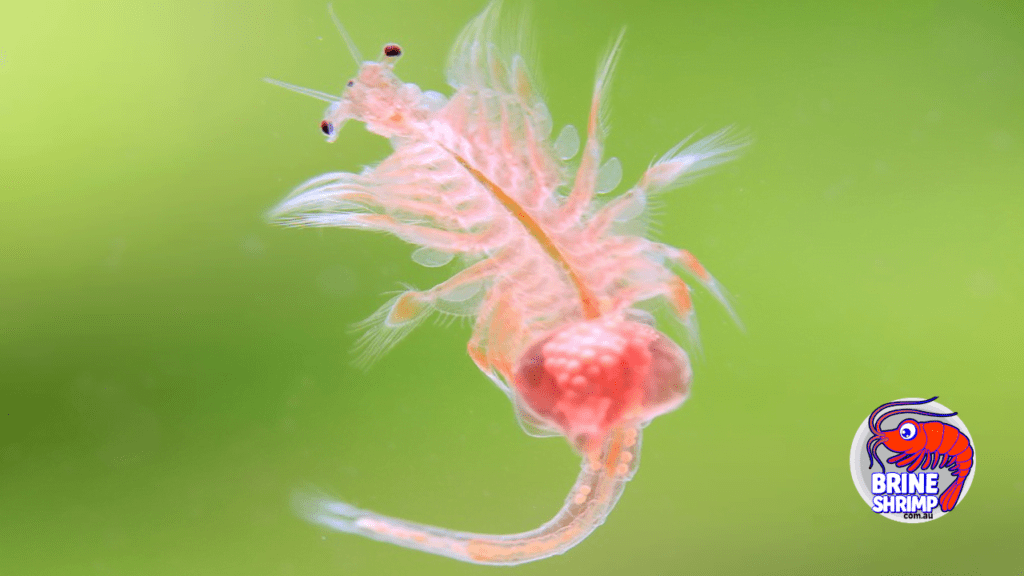
- 👨👩👧👦 Brine shrimp provide fascinating educational experience for kids, teaching salt solutions and feeding concepts while watching them grow like sea monkeys in small tanks.